When training for a marathon, gear matters. You don’t have to spend a lot of money on running gear, but you do want a few solid items that will last through the season and whatever Mother Nature throws our way.
Tops: Look for tech-fabric shirts - tanks, tees, long sleeves - that are not too tight. Tight clothes can dig and rub, while loose clothing can bunch and cause chafing. Tech fabrics wick sweat away from your skin, unlike cotton, which holds moisture and can leave you feeling heavy and uncomfortable.
Bottoms: Whether you prefer shorts, tights or capris, look for quality fabric. Do the seams lay flat, or do they dig into your skin? Are the pockets well placed - a key pocket is very useful.
Shoes:A good pair of running shoes is essential! Choosing the right shoe is an important part of training, but with so many options, finding the right one can feel overwhelming. Key factors include length, width, support and overall fit. You probably benefit from buying a shoe a half inch larger than your normal shoes. During longer efforts, your feet can swell, and you don’t want your toes to bump on the front of your shoe. And remember, our feet change over time, so the shoes that worked for you five years ago may not be the best choice today.
Last year, former LA Marathon Ambassador Hollie Sick, who previously worked at a running shoe store, talked about finding the shoes that are best for you - watch the recording here.
Socks: Socks matter, too. Look for a well-fitting tech sock and avoid cotton, which can contribute to blisters. Thin or thick, ankle or crew, it’s up to you. This is where you can show off your style with colors, patterns or fun designs.
Cold-weather gear: Even in Southern California, it gets cold in the winter, which happens to line up with some of our longest training runs. A good long-sleeve tech shirt and lightweight windbreaker should be enough for most days. Cap it off with a beanie and some gloves! You probably don’t need heavy coats or layers. Your body temperature will rise as you run, and heavy layers can leave you overheated and carrying extra clothing by mile two.
Water: Get used to carrying water with you, whether that’s a handheld bottle, hydration vest or reusable cup. Yes, the LA Marathon has water stations at almost every mile on course, but your training runs won’t. Practice drinking regularly during your longer workouts so you know what works for you on race day.
Have an inspired week!
David Levine
LARR Head Coach
P.S. Starting this week, only LARR members receive route maps and special event information.
If you're a member and you're receiving this non-member version, please reply to this email so we can update your account.
Not a member yet? If you’d like access to member-specific information and events, you can register here.
NEWS & UPDATES
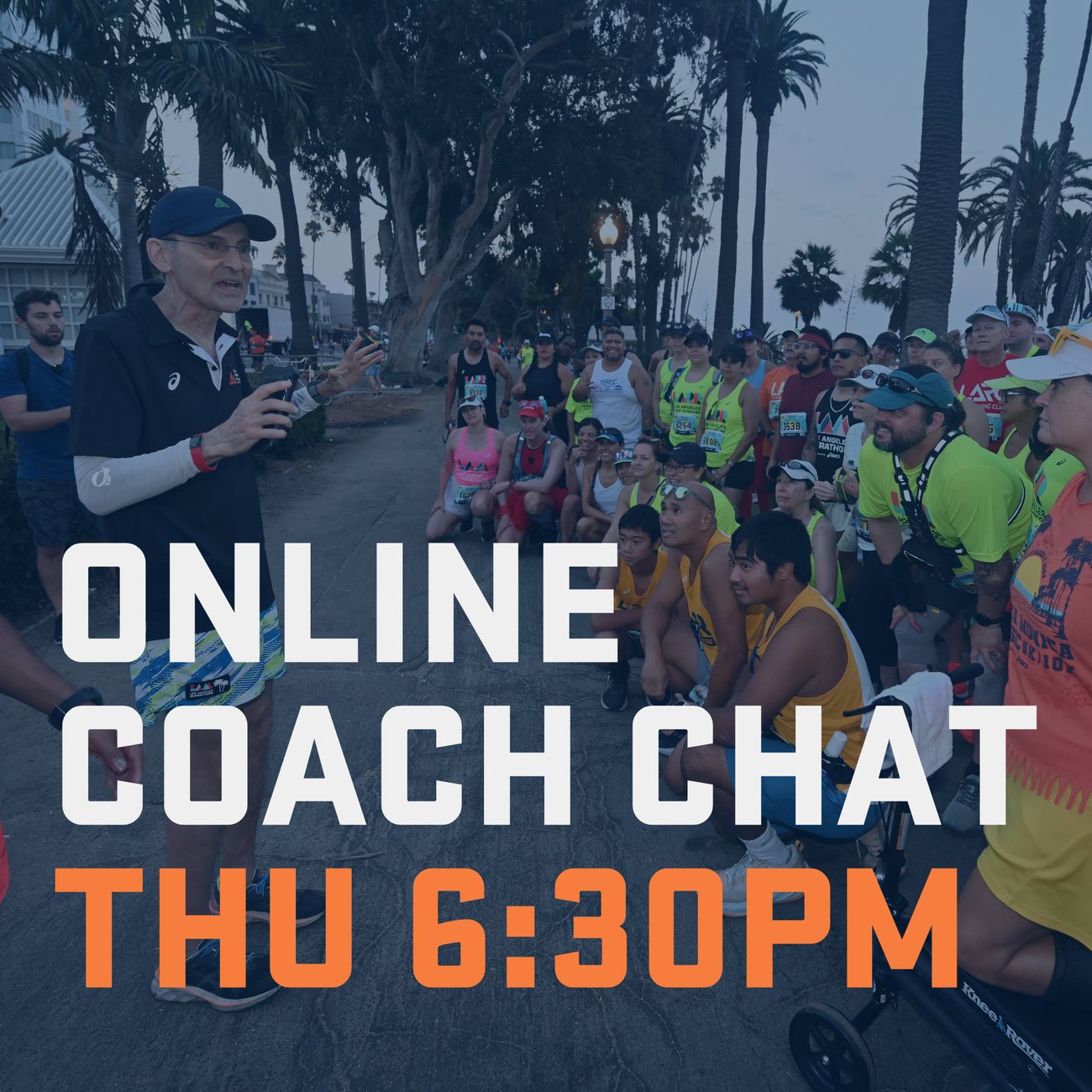
ONLINE COACH CHAT
THURSDAYS 6:30PM
Gearing up! A discussion about what to wear in all conditions - with Coach David, Lucie, and ASICS Tech Rep and Athlete Marquis Bowden.
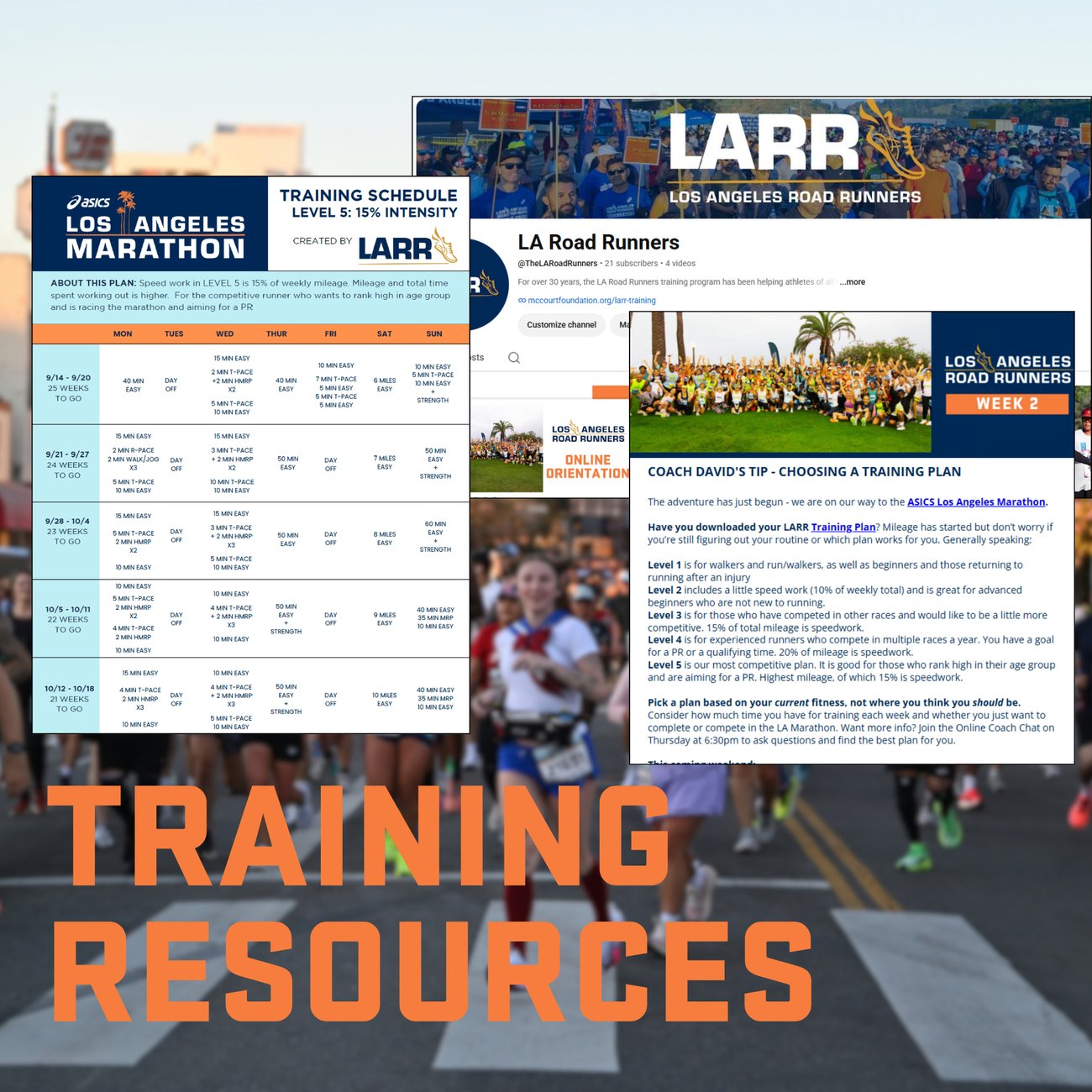
* Training Schedules (Level 1-5) * Archived Newsletters with Coach Tips * Online Coach Chat recordings * Coach David's Training FAQs
REGISTER FOR LARR * Coached In-Person Training * Pace Leaders for 3 - 6:30 goal finish time runners, walkers, and run/walkers * Member shirts provided by ASICS * Exclusive race day perks
* Friendship for miles!